 Turkey Holiday Diary
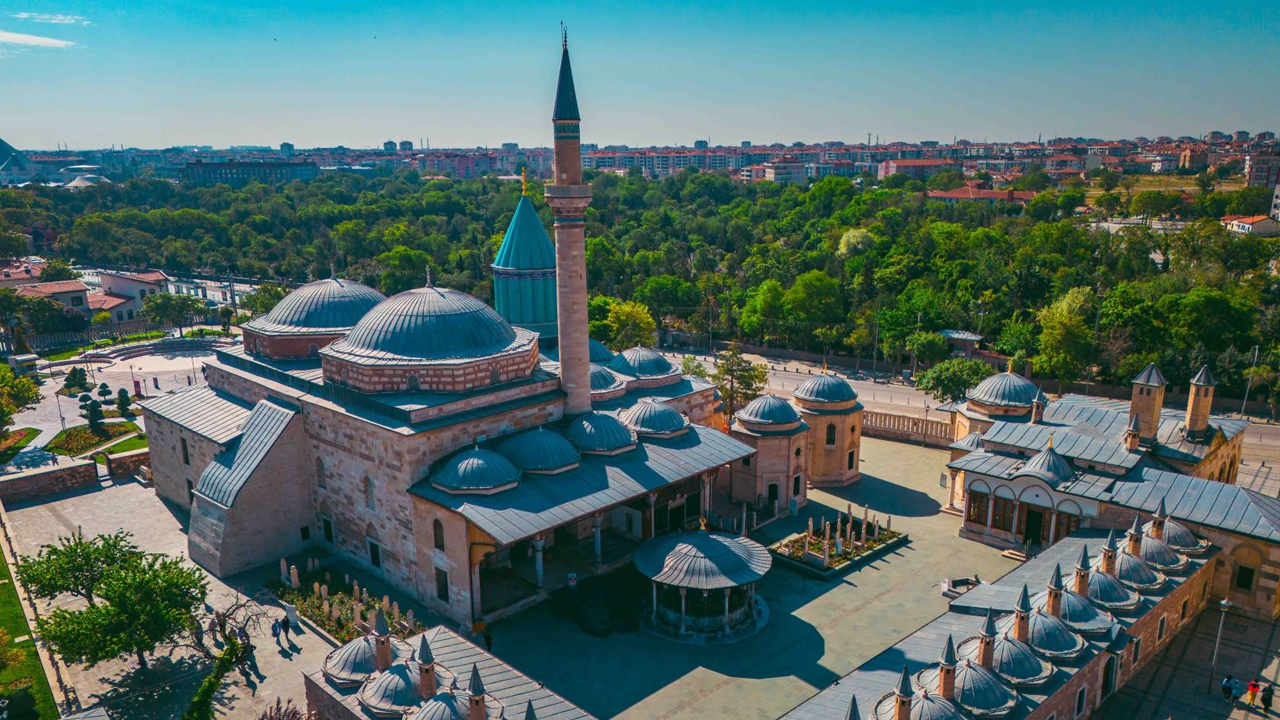
Konya is a large city on the Central Anatolian plateau, about 1,000 m above sea level, and the place where the poet and mystic Mevlana Celaleddin Rumi lived, taught and was buried. Its main sight is the Mevlana Museum, Rumi’s tomb under a turquoise dome inside the former lodge of the Mevlevi (whirling dervish) order. Around it are 13th-century buildings from the time when Konya was the Seljuk capital, and about 50 km south-east of the city lies the Neolithic site of Çatalhöyük. One full day covers the city’s main sights; two days let you add Çatalhöyük and an evening sema (whirling dervish ceremony). From Ankara, the high-speed train takes about two hours.
Why visit Konya
Rumi died in Konya on 17 December 1273, and his followers founded the Mevlevi order there. Their sema ceremony, in which the dervishes turn to music played on the ney (reed flute), has been on UNESCO’s Representative List of the Intangible Cultural Heritage of Humanity since 2008. Every December the city marks the anniversary of his death with Şeb-i Arus, a series of ceremonies that draws visitors from Turkey and abroad.
Konya was also the capital of the Seljuk Sultanate of Rum, which ruled much of Anatolia in the 12th and 13th centuries. The mosque on Alaeddin Hill and the two madrasas (religious colleges) beside it date from that period. Konya is a religious and fairly conservative city, so plan on modest clothing, especially around the Mevlana Museum and the mosques.
How to get to Konya
By high-speed train (YHT)
The easiest way in is the YHT high-speed train. Trains from Ankara take roughly 1¾ to 2¼ hours. From Istanbul the journey takes roughly 4¾ to 5½ hours depending on the service; trains call at several Istanbul stations, including Söğütlüçeşme and Pendik on the Asian side. Konya has two stations: the newer Konya Selçuklu YHT station in the north of the city and the older Konya station south-west of the centre. High-speed trains stop at both, and a taxi to the centre is quick from either. Buy tickets from TCDD Taşımacılık, the state rail operator, and book early for weekends, public holidays and the December ceremonies.
By air
Konya Airport (KYA) lies about 18 km north of the city and has frequent flights from Istanbul. Airport shuttle buses and taxis run to the centre.
By road from Cappadocia
Göreme, in the heart of Cappadocia, is about 230 km from Konya, roughly three hours by car or intercity bus via Aksaray. On the way, about 110 km from Konya, the Sultanhanı caravanserai, built in 1229 under Sultan Alaeddin Keykubad I, is a good place to break the journey.
What to see in Konya
Mevlana Museum
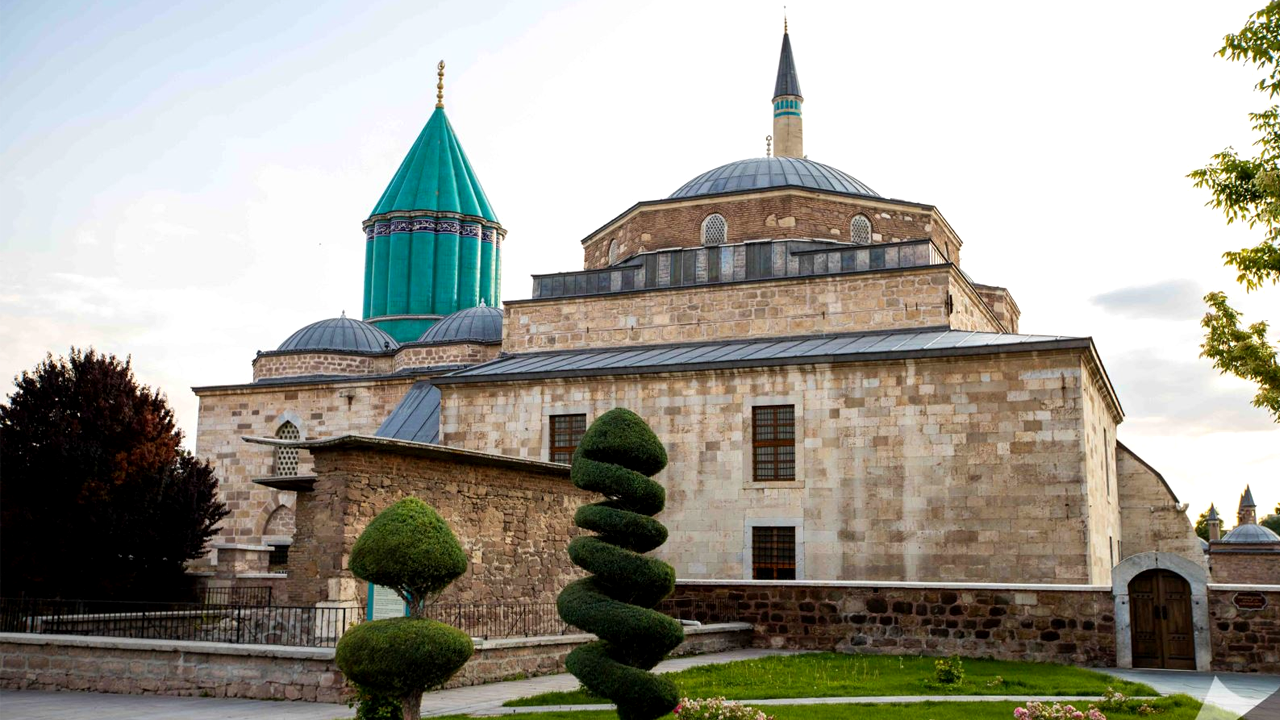
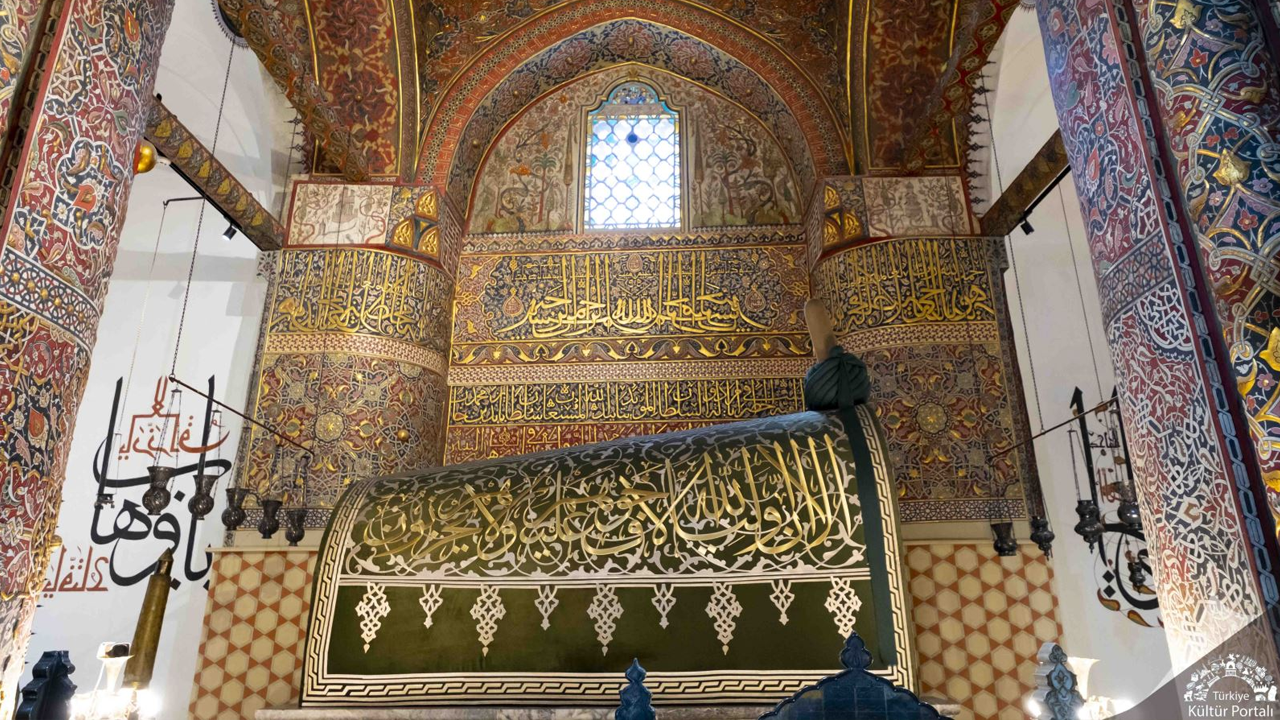
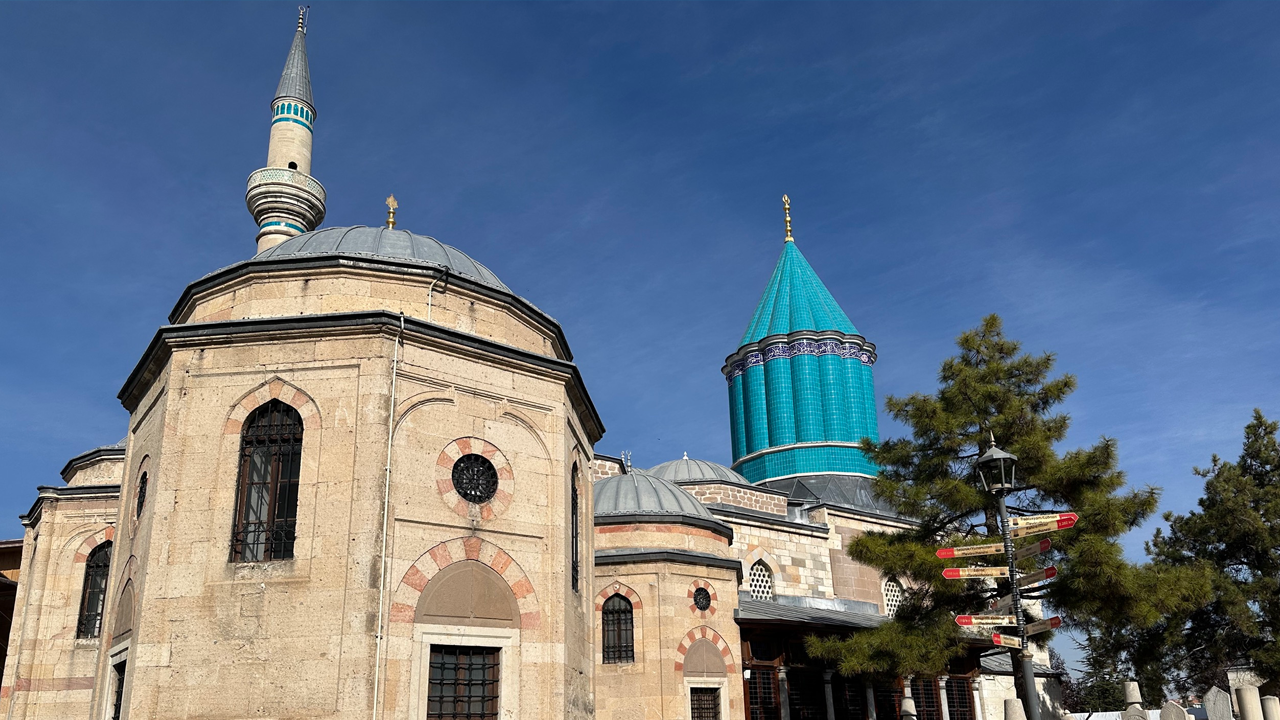
The museum occupies the former Mevlevi lodge (dergah) that grew up around Rumi’s grave. Its centre is the tomb chamber under the Green Dome (Kubbe-i Hadra), built in 1274 and covered in turquoise tiles, where Rumi lies beside his father, Bahaeddin Veled, his son, Sultan Veled, and other members of his family. The lodge was closed in 1925 when the Republic shut down all dervish lodges, opened to visitors as a museum in 1926 and took the name Mevlana Museum in 1954.
The main building also contains the semahane, the hall where the sema was once performed, and a small prayer room (mescit). Displays include Mevlevi musical instruments, belongings of Rumi and later dervishes, carpets and manuscripts, among them a copy of Rumi’s Mesnevi dated 1278. Look for the Nisan Tası, a bronze bowl dated 1327. Around the courtyard are the dervish cells on the north and west sides and the kitchen (matbah) on the south side.
This is a place of pilgrimage as well as a museum, and many visitors come to pray. Dress as you would for a mosque, keep your voice down in the tomb chamber, and expect queues at weekends, during public holidays and in December. The Ottoman-era Selimiye Mosque stands right next to the museum, and the tomb of Şems-i Tebrizi, Rumi’s companion, is a short walk away.
Whirling dervish ceremonies (sema)
The sema is a religious ceremony rather than a dance show. If you watch one, stay seated and quiet, follow the staff’s instructions on photography and don’t use flash; applause is usually not expected.
Weekly ceremony: the Ministry of Culture and Tourism’s Konya Turkish Sufi Music Ensemble performs a sema at the Mevlana Cultural Centre (Mevlana Kültür Merkezi) on Saturday evenings; its 2026–2027 season programme lists Saturday performances, with 19:00 starts where times are given. Tickets are sold online; dates can change around holidays and in December, so check the programme first.
Şeb-i Arus 2026: Şeb-i Arus (“wedding night”) commemorates Rumi’s death, which the Mevlevi see as his union with God. For the 753rd anniversary, the ceremonies run from 7 to 17 December 2026 in the Sema Hall of the Mevlana Cultural Centre, ending on the anniversary night of 17 December. According to the official Şeb-i Arus page, tickets have been on sale through biletinial.com since 9 October 2026, and the other cultural events held in various halls during the commemoration are free. The final nights are the most popular, so book well ahead.
If your trip also takes in Istanbul, see our guide to whirling dervish ceremonies in Istanbul.
Alaeddin Hill and the Alaeddin Mosque
Alaeddin Hill, an ancient settlement mound in the middle of the city, is now a park with the Seljuks’ main mosque on top. Building began under Sultan Mesud I, and an inscription over the entrance credits Alaeddin Keykubad I with completing it in 1220–21. Inside, the carved ebony minbar (pulpit) is dated 1155 and is the earliest dated Seljuk work of art in Anatolia. In the courtyard, the tomb built by Kılıçarslan II holds the sarcophagi of eight Seljuk sultans. The Mevlana Museum is at the other end of the main street, a short tram ride or a walk of under half an hour away.
Karatay Madrasa (Tile Works Museum)
On the north side of Alaeddin Hill, the Karatay Madrasa was built in 1251 by the Seljuk statesman Celaleddin Karatay. Its carved marble portal is worth a look, but the main reason to go inside is the dome, covered in Seljuk tile mosaic, mostly in black and turquoise, with bands of Kufic script. Since the mid-1950s it has been a museum of tiles and ceramics, including tiles from the Seljuk palace of Kubadabad on Lake Beyşehir. A visit takes about 30–45 minutes.
İnce Minareli Madrasa (Stone and Wood Works Museum)
On the west side of the hill, the İnce Minareli Madrasa (“madrasa of the slender minaret”) was built in the second half of the 13th century for the vizier Sahip Ata Fahreddin Ali. The highlight is its portal: carved stone panels of Quranic calligraphy that rise the full height of the façade. The tiled brick minaret that gave the building its name lost its upper part to a lightning strike in 1901. Inside, the museum shows Seljuk-era stone and wood carving, including reliefs of a double-headed eagle and a winged angel.
Sille
About 8 km north-west of the centre, Sille is an old village of stone houses where a Greek Orthodox community lived until the 1920s. Its church of Aya Elena, which tradition dates back to the 4th century, has been restored and is now a museum. City buses run out from the centre, making Sille an easy half-day trip.
Çatalhöyük day trip
Çatalhöyük, a UNESCO World Heritage Site since 2012, is one of the best-known Neolithic settlements in the world. People lived here for well over a thousand years, flourishing around 7000 BC. The houses were built wall to wall with no streets between them, and people moved across the flat roofs and entered their homes through openings in them. Visitors see a small visitor centre, a reconstructed house and excavated areas under protective shelters. Most of the famous finds, including the clay figurine known as the Seated Woman of Çatalhöyük, are in the Museum of Anatolian Civilizations in Ankara, so the on-site displays rely mainly on replicas and panels.
The site is about 50 km south-east of Konya, near the town of Çumra, roughly an hour by car. With a car or taxi it is a half-day trip; by public transport via Çumra, allow most of the day. The ground is uneven, and the site’s own visitor information says it is not wheelchair-accessible.
Tickets, opening hours and practical tips
Entry details below are as of November 2026, taken from the Ministry of Culture and Tourism’s official museum listings. Check the official Mevlana Museum page before you go, as hours and fees change.
| Site | Opening hours | Entry (non-Turkish adults) |
|---|---|---|
| Mevlana Museum | Open every day, 09:00–17:00 (last admission 16:30) | Free |
| Karatay Madrasa (Tile Works Museum) | Daily; 09:00–16:40 (1 Oct–31 Mar), 09:00–18:40 (1 Apr–30 Sep) | €3 |
| Çatalhöyük | Daily; 09:00–16:40 (1 Oct–14 Apr), 09:00–17:40 (15 Apr–30 Sep) | €5 |
| İnce Minareli Madrasa | Not listed on the official page; check locally | Not listed |
- Time needed: 1–1½ hours for the Mevlana Museum, about an hour each for Alaeddin Hill and the two madrasas, and a half day for Çatalhöyük.
- Mosques: avoid Friday midday prayers at the Alaeddin and Selimiye mosques; women should carry a headscarf.
- Getting around: the central sights are close together and easy to walk between. Trams and city buses use a rechargeable transport card rather than cash.
- Weather: summer days are hot and dry, but evenings cool down. Winter is cold, with frequent frost and occasional snow, so bring warm layers if you come for Şeb-i Arus.
Best time to visit Konya
April–May and September–October are the most comfortable months for walking between sights and visiting Çatalhöyük, which has little shade. In summer, see the outdoor sights early and keep the museums for the afternoon. December brings Şeb-i Arus, the most atmospheric time to be in Konya, but also the coldest weather, the biggest crowds at the Mevlana Museum and the highest demand for trains and hotels.
Where to stay and what to combine with Konya
Stay in the centre, within walking distance of the Mevlana Museum, so you can visit early before the crowds. One or two nights is enough for most visitors.
Konya pairs naturally with Cappadocia, three hours to the east: many travellers stop here on the way and continue to Göreme for its valleys and a hot air balloon flight. If you arrive by train from Ankara, add a few hours in the capital for Anıtkabir and the Museum of Anatolian Civilizations, where Çatalhöyük’s finds are kept. If Çatalhöyük sparks an interest in early settlements, Göbeklitepe in south-eastern Turkey is older still. Our Turkey travel map shows how these places connect.
FAQ
Is the Mevlana Museum free to visit?
Yes. As of November 2026 the official museum listing shows free entry for all visitors. It is open every day.
When is Şeb-i Arus in 2026?
From 7 to 17 December 2026, at the Mevlana Cultural Centre in Konya. The final ceremony on 17 December marks the anniversary of Rumi’s death in 1273.
Can you see whirling dervishes in Konya outside December?
Yes. The state Sufi music ensemble performs a sema at the Mevlana Cultural Centre on Saturday evenings during its season. Check the current programme and book tickets online.
Can you visit Konya as a day trip from Cappadocia?
It is possible, but with about three hours each way it makes a long day. It works better as an overnight stop between Cappadocia and Ankara or the coast.