
 Turkey Holiday Diary
 7 min read
A Journey to Mardin: Where History and Architecture Meet
The mystical city of Mardin, located in Southeastern Anatolia, enchants visitors with its stone-paved streets and unique architectural heritage. One of the must-see historical landmarks of this fascinating city is the Zinciriye Madrasa, a masterpiece that impresses both with its architectural beauty and its breathtaking panoramic view. This medieval Islamic educational institution stands as a testament to the sophisticated civilization that flourished in this region centuries ago.
Understanding Mardin’s Historical Context
Before exploring Zinciriye Madrasa, it helps to understand Mardin’s unique position in history. This ancient city has been continuously inhabited for thousands of years, its strategic hilltop location making it a prize for successive empires. The Assyrians, Persians, Romans, Byzantines, Arabs, Seljuks, Artuqids, and Ottomans all left their marks on Mardin’s architecture and culture.
The Artuqid Dynasty, a Turkoman dynasty that ruled the region from the 11th to the 15th centuries, commissioned many of Mardin’s most impressive monuments. Their architectural legacy combines Central Asian, Persian, Arabic, and Syrian influences into a distinctive regional style characterized by intricate stonework, geometric patterns, and harmonious proportions.
Where is Zinciriye Madrasa?
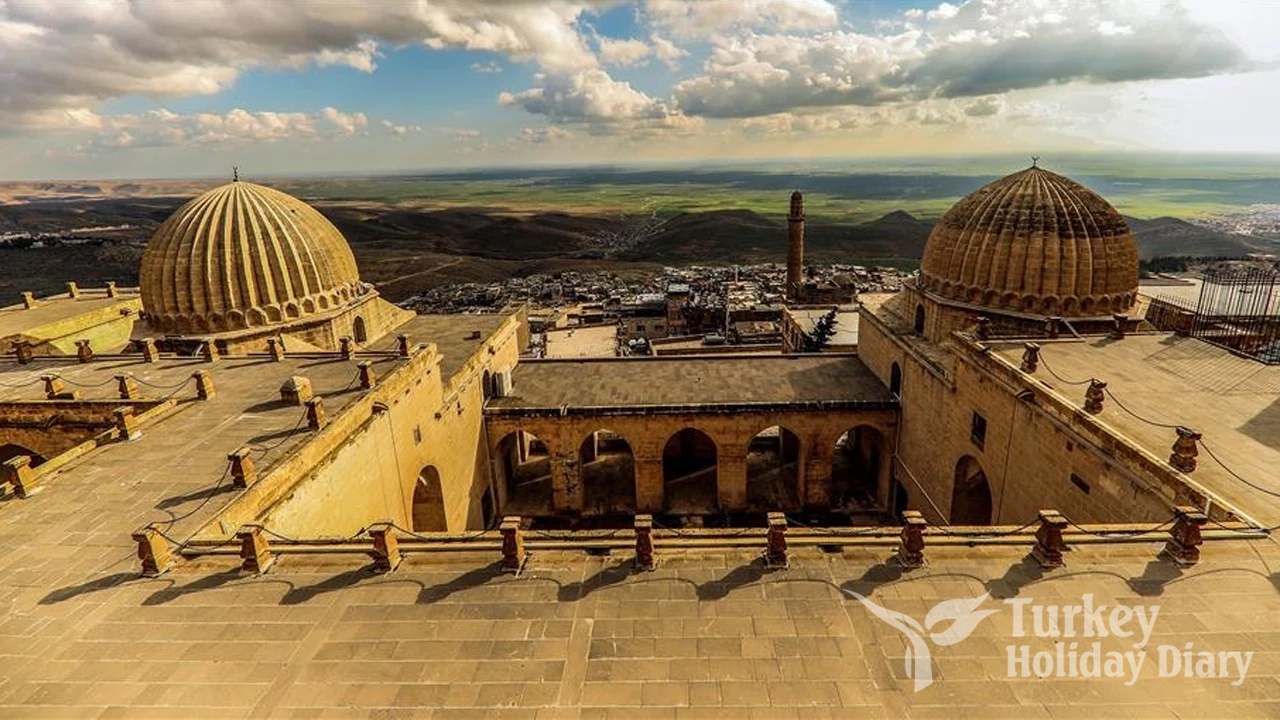
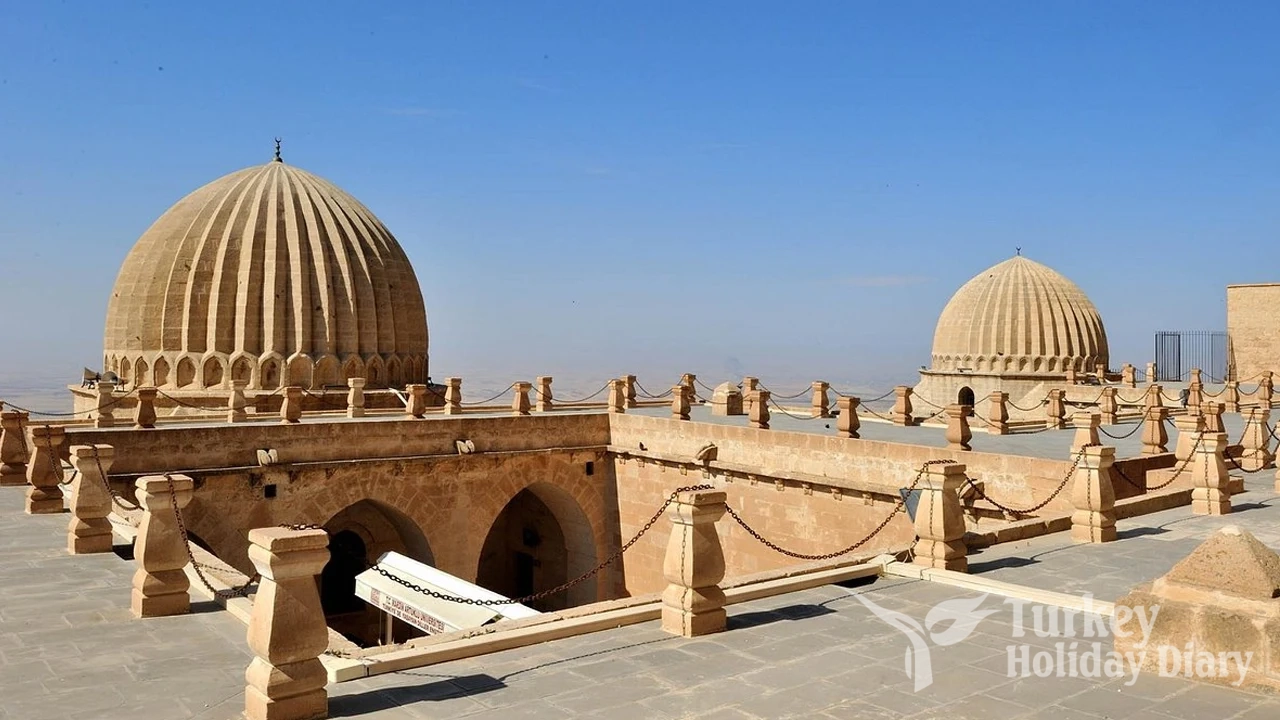
Zinciriye Madrasa is situated in the Artuklu district, right in the heart of old Mardin, perched on one of the city’s highest points. Thanks to its perfect location, visitors can enjoy stunning views of both the vast Mesopotamian plains and the iconic stone houses of Mardin.
The madrasa occupies a commanding position that was carefully chosen by its builders. Looking north, the viewer sees the cascade of honey-colored stone houses that define Mardin’s unique silhouette. Looking south, the eye travels across the flat Mesopotamian plains that stretch toward Syria, sometimes reaching as far as the mountains of Kurdistan on clear days.
This strategic placement served both practical and symbolic purposes. Students needed quiet for their studies, and the elevation provided separation from the busy markets below. Symbolically, the height expressed the institution’s importance and the elevated pursuit of knowledge it represented.
History and Significance
Zinciriye Madrasa was built in 1385 by the Artuqid Sultan Melik Necmeddin Isa. For this reason, it is also known locally as the “Sultan Isa Madrasa”. The complex served both as a center of Islamic education and a religious hub, playing an important role in the intellectual and cultural life of its time.
The madrasa functioned as a university of sorts, teaching Islamic law, theology, philosophy, mathematics, astronomy, and medicine. Students came from across the region to study under learned scholars, living in cells arranged around the central courtyard. The institution produced judges, administrators, and religious leaders who served throughout the region.
Besides its historical importance as one of Anatolia’s significant Islamic educational institutions, the madrasa stands as a fine example of the region’s architectural elegance. The building continued its educational mission for centuries, adapting its curriculum to changing times while preserving its architectural integrity.
Architectural Features
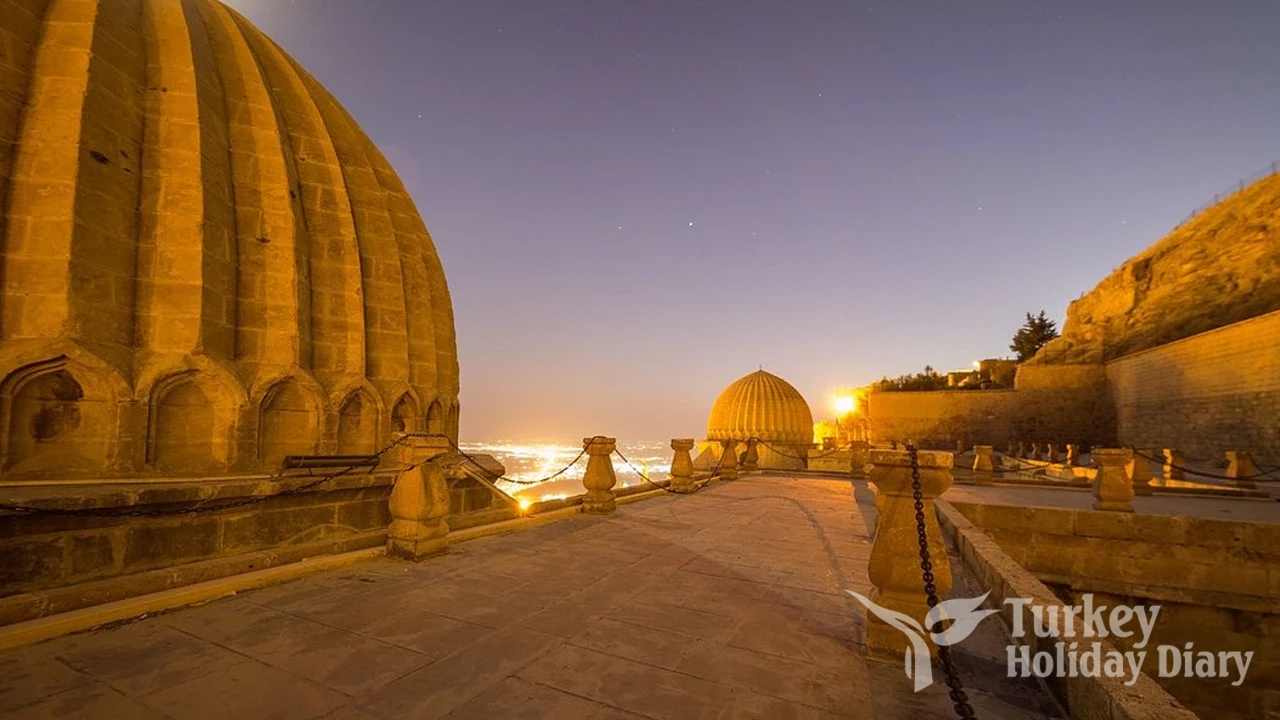
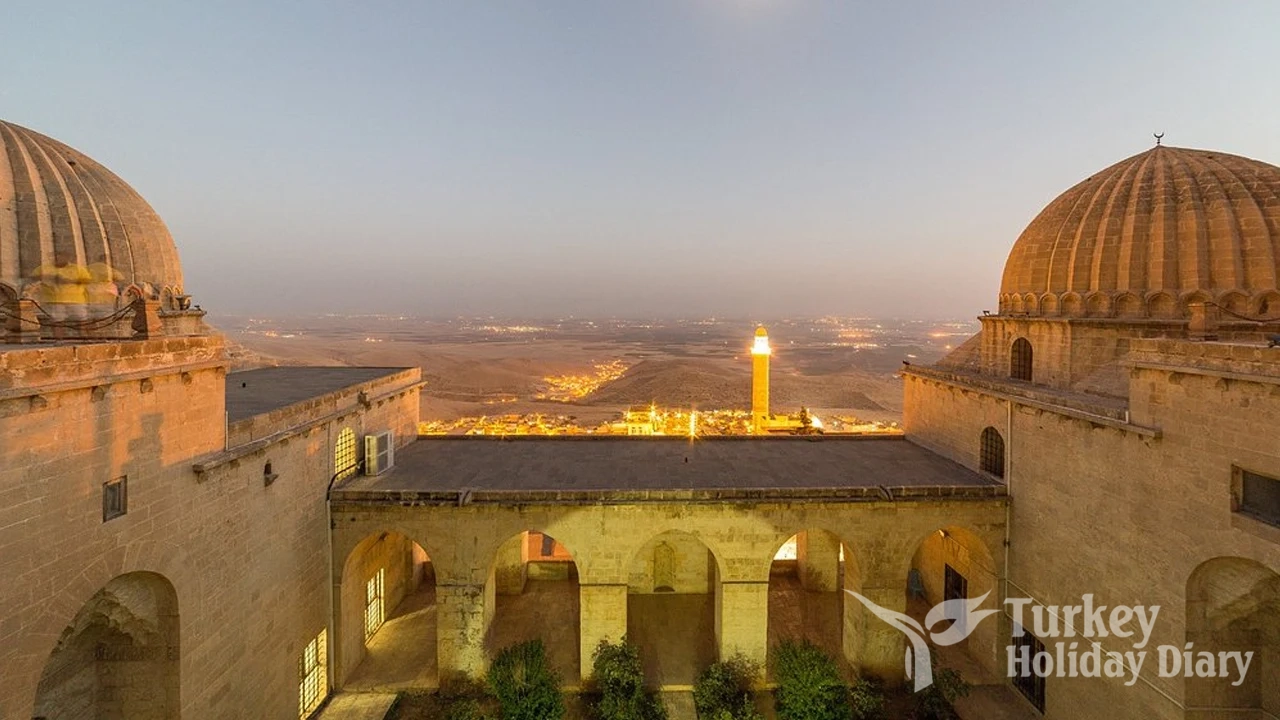
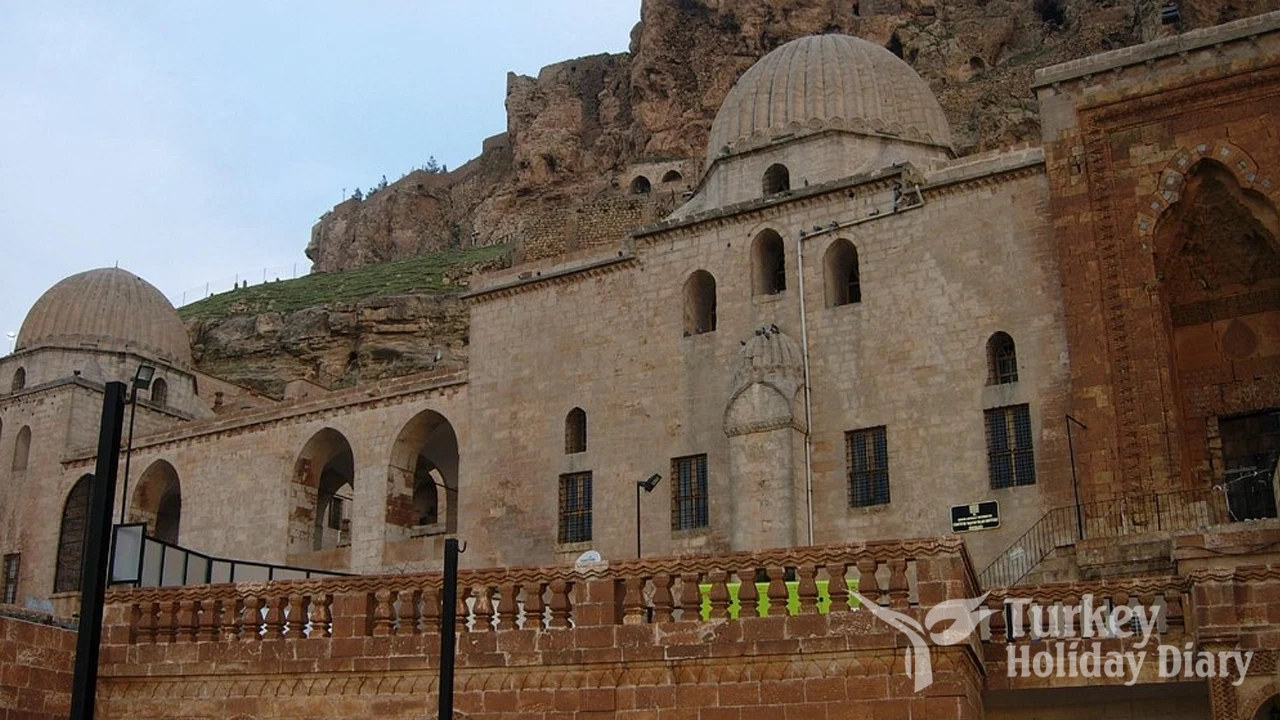
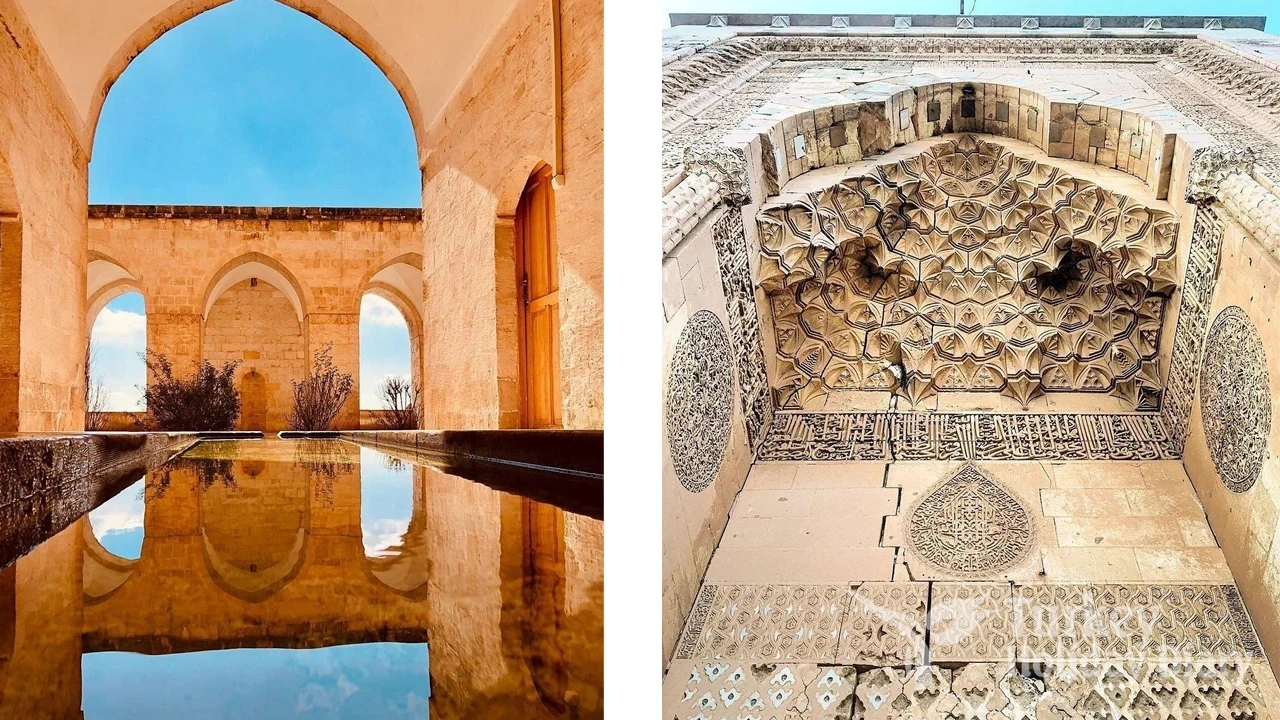
Zinciriye Madrasa showcases the sophisticated craftsmanship of the Artuqid architectural style. Its detailed stonework, high-arched gates, spacious courtyard, and decorative elements mesmerize visitors. The courtyard features small domed structures and narrow corridors that transport you straight into the depths of history. From its terrace, you can witness a breathtaking view of the Mesopotamian plains – perfect for capturing stunning photos, especially at sunrise or sunset.
The entrance portal exemplifies Artuqid stonework at its finest. Muqarnas (stalactite vaulting) decorates the semi-dome above the doorway, while geometric patterns in stone create visual complexity without color. The craftsmen who carved these intricate designs worked without power tools, achieving precision that modern sculptors would envy.
The central courtyard follows the classic four-iwan plan common to Islamic educational institutions. Each iwan (a vaulted space open on one side) served different functions – for teaching, prayer, or social gatherings. The main iwan, facing the entrance, housed the most important lectures and ceremonies.
Student cells line the courtyard perimeter on two stories. These small rooms provided basic accommodation – a platform for sleeping, a niche for a lamp, and perhaps space for a few books. Students lived simply, focusing their energy on their studies.
The Name “Zinciriye”
The name “Zinciriye” (meaning “chain” in Turkish) has several explanations. The most common relates to the carved stone chain that decorates the entrance portal – a single piece of stone carved to appear as interlocking chain links. This impressive technical achievement demonstrates the master craftsman’s skill and serves as a kind of signature of excellence.
Another explanation connects the name to chains that may have hung at the entrance, requiring visitors to bow upon entering as a sign of respect for the institution and the knowledge it housed.
The Tomb of Sultan Isa
Within the complex lies the tomb of Sultan Isa, the Artuqid ruler who commissioned the building. The tomb chamber features carved stonework and a peaceful atmosphere appropriate for royal remains. Visitors often pause here to pay respects and contemplate the sultan’s legacy – a ruler remembered not for military conquests but for his patronage of education and architecture.
Why Should You Visit Zinciriye Madrasa?
- A historic atmosphere: Experience the charm of 14th-century Islamic architecture and culture. Walking through the courtyard, you sense the presence of countless students who studied here centuries ago.
- Magnificent views: Take unforgettable photos of Mardin’s stone houses and the vast Mesopotamian plains. The terrace provides one of the best viewpoints in a city famous for its panoramas.
- A peaceful retreat: Escape the city’s hustle and enjoy a quiet and serene setting. The thick stone walls and elevated position create a contemplative atmosphere.
- Architectural wonder: Study the intricate stonework that ranks among the finest medieval craftsmanship in Anatolia.
- Easy access: Conveniently located in the city center, reachable on foot or by vehicle.
Photography Tips
Photographers will find Zinciriye Madrasa endlessly rewarding. The stonework provides excellent subjects for detail shots, while the terrace views offer sweeping panoramas. Golden hour light, either sunrise or sunset, creates magical conditions as the warm rays highlight the stone’s honey tones.
The geometric patterns in the carved stone reward close-up photography, revealing details invisible to the casual observer. Wide-angle lenses capture the courtyard’s proportions, while telephoto shots from the terrace can isolate interesting details in the cityscape below.
Combining with Other Mardin Attractions
Zinciriye Madrasa forms part of a cluster of historic monuments in old Mardin. Nearby attractions include the Kasimiye Madrasa, the Great Mosque, the Forty Martyrs Church, and the Sakip Sabanci City Museum. A full day allows comfortable exploration of these sites while still leaving time to wander the atmospheric streets and browse the traditional markets.
Visitor Information
- Address: Sar Neighborhood, 47100 Artuklu/Mardin
- Entrance Fee: Free of charge
- Visiting Hours: 08:00 AM – 07:00 PM (may vary by season)
Best Time to Visit
Spring (April-May) and autumn (September-October) offer the most pleasant weather for exploring Mardin. Summer temperatures can exceed 40 degrees Celsius, making midday sightseeing uncomfortable. Winter brings mild temperatures but occasional rain. For photography, early morning or late afternoon light creates the most atmospheric conditions.
Conclusion
If your journey brings you to Mardin, make sure to visit Zinciriye Madrasa. This historical monument will please both your soul and your eyes, making your trip to Mardin truly unforgettable. For travelers seeking an authentic experience intertwined with history, Zinciriye Madrasa is a must-visit destination. The combination of architectural beauty, historical significance, and spectacular views makes it one of Southeastern Turkey’s hidden treasures.
Our previous article List of Places to Visit in Safranbolu in our article titled Travel Guide provides information about.
4 Comments
Zinciriye Madrasa architecture is stunning! The views over Mesopotamian plains are incredible.
The stone carvings are so detailed! This madrasa is one of Mardin best-kept secrets.
The peaceful courtyard was perfect for reflection. Mardin history is so rich!
A hidden gem in already special Mardin! The sunset from here is unforgettable.