
 Turkey Holiday Diary
 6 min read
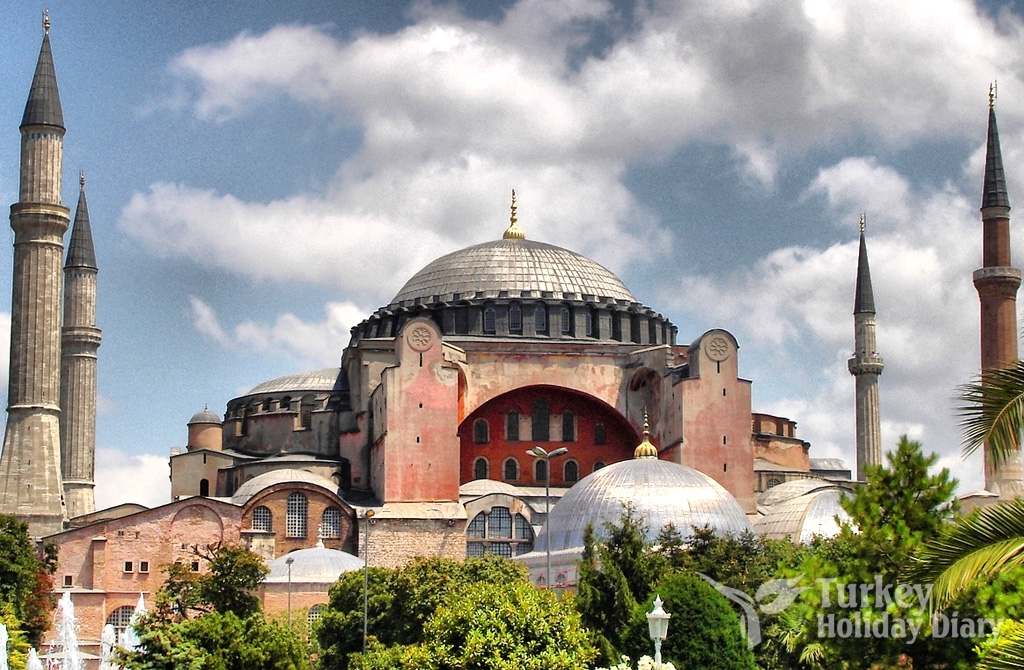
Istanbul, which is one of the most valuable cities in Turkey, is also home to many religious groups and civilizations that have shaped world history. Hagia Sofya, one of the world leading religious buildings and architectural masterpieces, is located in this magnificent city. Every year thousands or even millions of local and foreign tourists visit this place to witness the grandeur of human achievement and spiritual significance that spans nearly two millennia.
The Historical Journey of Hagia Sophia
Hagia Sophia has a very long and fascinating history that reflects the changing face of civilizations. And it was first made in 360 by Constantius (337-361). This corresponds to the first period of Hagia Sophia. And it is considered one of the most important structures of Eastern Rome. Aya Sofya, which was built on this date, is also called as 1st Kile. And he remained a church for a very long time.
The original structure, however, was destroyed during riots and had to be rebuilt. The second church was constructed under Theodosius II in 415 AD, but this too met a tragic end during the Nika riots of 532 AD. What we see today is largely the third construction, commissioned by Emperor Justinian I, who sought to create a building that would surpass all others in grandeur and magnificence.
The Second Period and Religious Significance
Hagia Sophia second era is Emperor II. It corresponds to the period of Theodosios (408-450). And in this period, Aya Sofia is now blessed. Most people who come here are called pilgrims. Because Hagia Sophia became a place of religious rites for the Christians. After this date, the status of Hagia Sophia changed very differently.
During the Byzantine period, Hagia Sophia served as the seat of the Patriarch of Constantinople and was the center of religious ceremonies, including imperial coronations. The building witnessed countless historical events, from religious councils to dramatic political upheavals. Pilgrims from across the Christian world traveled great distances to pray within its sacred walls.
The Ottoman Transformation
Haghia Sophia was in church status until 1453. But things have changed dramatically. Because during the reign of Sultan Mehmet the Conqueror, Hagia Sophia became part of the Ottoman Empire, just like Istanbul, and the next day a prayer was opened as a mosque. Today, Hagia Sophia attracts attention as a church, a mosque and a museum style building.
Sultan Mehmet the Conqueror was so impressed by the building that he immediately ordered its conversion into a mosque while preserving much of its Byzantine heritage. The Ottomans added minarets, a mihrab, a minbar, and large calligraphic medallions bearing the names of Allah, Prophet Muhammad, and the first caliphs. These additions created a unique blend of Christian and Islamic artistic traditions.
In 1453, the adventure of conversion to the mosque continued for such a long time. And since this date it has become one of the most important figures of the Islamic world. Subsequent sultans continued to maintain and embellish the structure, adding fountains, tombs, and a madrasa to the complex.
The Republican Era and Museum Status
Aya sofya passed a different status during the transition period of the Republic of Turkey in 1923. And since that date it is now used as a museum. In 1934, under the direction of Mustafa Kemal Ataturk, Hagia Sophia was converted into a museum, opening its doors to visitors of all faiths and backgrounds. This decision allowed for the restoration and preservation of both its Byzantine mosaics and Ottoman additions.
The museum period saw extensive restoration work that uncovered many Byzantine mosaics that had been plastered over during the Ottoman period. Visitors could now appreciate the building full historical complexity, seeing Christian imagery alongside Islamic calligraphy in harmonious coexistence.
Architectural Marvel and Dimensions
Hagia Sophia is a huge building with very large dimensions that continue to amaze architects and engineers today. The main dome rises 55.6 meters above the floor and spans 31.87 meters in diameter, making it one of the largest domes ever constructed in the ancient world. The architects Anthemius of Tralles and Isidorus of Miletus achieved what many thought impossible by creating a dome that appears to float on a ring of light from the forty windows at its base.
There are thousands of different Roman, Greek, Ottoman and Republican symbols in this structure. The interior covers approximately 7,570 square meters and features massive marble columns brought from ancient temples across the empire. The walls are adorned with precious marbles in various colors, while golden mosaics depicting Christ, the Virgin Mary, and various emperors and empresses gleam in the natural light.
What to See Inside Hagia Sophia
When visiting Hagia Sophia, there are several must-see features. The Deesis Mosaic on the upper gallery is considered one of the finest examples of Byzantine art, showing Christ flanked by the Virgin Mary and John the Baptist. The Weeping Column, also known as the Wishing Column, is famous for its moisture and the legend that touching it brings good fortune.
The upper galleries offer spectacular views of the interior and house several important mosaics. The Viking runes carved into the marble balustrades by a Varangian guard centuries ago remind visitors of the many different peoples who have passed through these halls.
Visiting Information and Practical Tips
Today, millions of people visit every year to experience this unique monument. Also, entries into the Aya Sofy are possible only after certain protocols are provided. As Hagia Sophia now functions as a mosque, visitors should dress modestly, covering shoulders and knees. Women are requested to cover their heads, and headscarves are available at the entrance for those who need them.
The best times to visit are early morning or late afternoon to avoid the largest crowds. Friday prayers attract many worshippers, so tourists may want to plan accordingly. The building is generally open daily, though prayer times may affect visiting hours.
Nearby Attractions
Hagia Sophia location in the historic Sultanahmet district means many other attractions are within walking distance. The Blue Mosque stands directly across the square, while the Topkapi Palace, the Basilica Cistern, and the Istanbul Archaeology Museums are all nearby. The Hippodrome, once the center of Byzantine public life, is just steps away.
Visitors can easily spend an entire day exploring this historic area, enjoying traditional Turkish cuisine at nearby restaurants, and shopping for souvenirs at the Arasta Bazaar located behind the Blue Mosque.
Why Hagia Sophia Matters
Aya sofya is an important structure in terms of history, religion and cultural tourism. This kind of interest is due to the fact that it carries traces of all religions and civilizations. For nearly 1,500 years, Hagia Sophia has stood as a testament to human creativity, faith, and the continuity of civilization. It has inspired countless other buildings, from the Blue Mosque next door to churches and mosques around the world.
Whether you are interested in architecture, history, religion, or simply wish to experience one of humanity greatest achievements, Hagia Sophia offers an unforgettable journey through time. Standing beneath its massive dome, visitors cannot help but feel connected to the countless generations who have stood in the same spot, gazing upward in wonder.



4 Comments
Hagia Sophia is breathtaking! The architecture spanning centuries is remarkable. Standing inside you can feel the weight of history.
An absolutely magnificent building! The blend of Byzantine and Ottoman architecture is stunning. The massive dome left me in awe.
Visited Hagia Sophia and was amazed by its grandeur. The mosaics and calligraphy are beautiful. Arrived early to avoid crowds.
One of the most impressive buildings I have ever seen! The history from church to mosque to museum is fascinating.